How Much Iron Do Women Really Need Daily?
“How much iron do I actually need?” is one of the most common questions that comes up once someone starts paying attention to their nutrition — and it's a fair one, since the answer isn't a single fixed number. Iron needs shift noticeably across a woman's life, which is part of why generic advice often falls short.
Here's a practical, realistic breakdown of what affects your iron needs and how to think about whether you're getting enough.
Why Iron Needs Differ Between Men and Women
Women lose iron every month through menstruation, which is the single biggest reason their requirements are meaningfully higher than men's for most of their adult life. This gap narrows after menopause, when iron needs typically drop closer to male levels, since that monthly loss no longer applies.
How Iron Needs Change by Life Stage
• Teenage years — needs rise sharply once periods begin, a stage often overlooked in nutrition planning
• Adult reproductive years — the highest sustained need, driven by regular menstrual blood loss
• Pregnancy — requirements increase substantially to support increased blood volume and the baby's development
• Post-menopause — needs typically decrease, closer to what's recommended for men
Exact numbers vary by individual health and are best confirmed with your doctor rather than a generic chart — but understanding which life stage carries the highest need helps explain why iron deficiency is so common among women specifically during their reproductive years.
Signs You're Not Getting Enough
Fatigue, pale skin, dizziness, and brittle nails are among the more common signals of low iron — we've covered the full list in detail in our article on iron deficiency symptoms. If several of these sound familiar, it's worth a conversation with your doctor rather than guessing.
How to Roughly Estimate Your Intake From Food
You don't need to track exact milligrams daily, but it helps to notice patterns. If your typical week includes regular servings of iron-rich foods — lentils, leafy greens, jaggery, dried fruits — alongside vitamin C to aid absorption, you're likely in a reasonable position. If your diet leans heavily on refined grains and low vegetable intake, that's a signal worth addressing, either through food changes or supplementation.
Should You Test Before Supplementing?
Ideally, yes. A blood test measuring haemoglobin and ferritin gives you a real baseline rather than a guess, and helps avoid unnecessarily high-dose supplementation when it isn't needed. That said, a standard daily multivitamin containing iron at typical supportive levels is generally considered reasonable for most women without needing to test first — testing becomes more important if you suspect a more significant deficiency.
If you do get tested, keep the results — ferritin and haemoglobin levels are useful to track over time, especially if you're making dietary changes or starting a supplement, so you can see whether your approach is actually working rather than guessing.
Iron-Rich Meal Ideas for the Week
• Palak dal with a squeeze of lemon — combines iron-rich spinach and lentils with vitamin C for better absorption
• Rajma or chickpea curry — a filling, iron-rich legume base for lunch or dinner
• Dates and jaggery as a sweet snack — a simple swap from processed sugary snacks
• Sprouted moong salad with tomato and lime — light, iron-supportive, and easy to prep in advance
None of these require a major diet overhaul — small, repeatable swaps across the week tend to matter more than one perfect iron-rich meal eaten occasionally.
Iron Needs During Heavy Periods
Women with heavier or longer periods lose more iron each cycle than average, which can gradually deplete stores over time even with a reasonably good diet. If your periods are notably heavy, this is worth flagging to your doctor specifically, since it may mean your iron needs are higher than typical guidelines suggest.
When Supplements Help
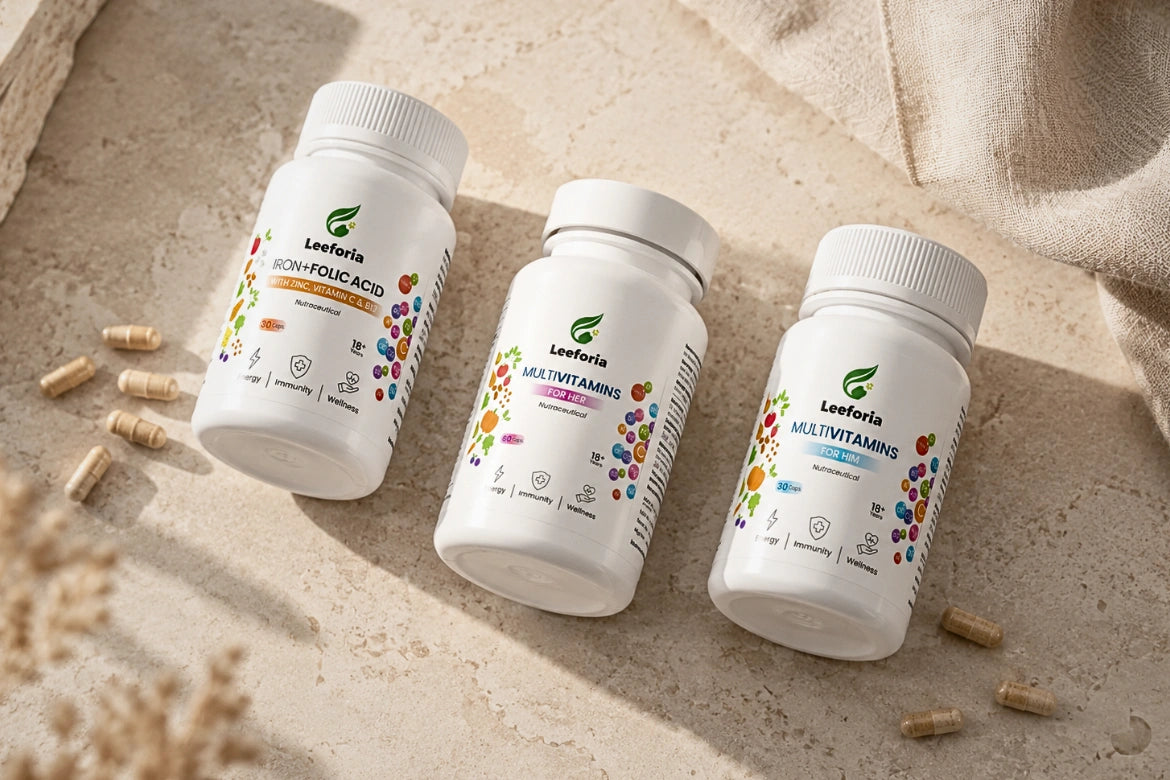
For women who find it hard to consistently meet iron needs through food alone, Leeforia's Iron and Folic Acid capsules offer a straightforward daily option, formulated alongside folate to support overall red blood cell health.
Related reading: Iron Deficiency Symptoms in Women: What to Watch For · Benefits of Folic Acid for Women's Health
Frequently Asked Questions
Q: Do all women need the same amount of iron?
A: No — needs vary significantly by life stage, with reproductive-age women generally needing more than post-menopausal women, and pregnancy increasing needs further still.
Q: Can I get too much iron from a normal diet?
A: It's uncommon from food alone. Excess iron is more typically a concern with high-dose supplements taken without medical guidance, which is one reason testing before heavy supplementation is worthwhile.
Q: Is it normal for iron needs to drop after menopause?
A: Yes, this is expected and normal, since the primary driver of higher iron needs — menstrual blood loss — no longer applies after menopause.
Q: How do heavy periods affect iron needs?
A: Heavier or longer periods mean more blood, and therefore more iron, lost each cycle, which can increase overall requirements compared to someone with lighter periods.
Q: Should teenagers be concerned about iron intake?
A: Yes — iron needs rise notably once periods begin, and this life stage is often overlooked in nutrition conversations. It's a reasonable thing to discuss with a doctor or pediatrician.