Benefits of Folic Acid for Women's Health
Folic acid rarely gets the spotlight the way iron or vitamin D does, but it plays a quietly essential role in women's health — from energy production to cell growth to supporting a healthy pregnancy. Despite this, it's one of the more commonly under-consumed nutrients, especially among women juggling busy schedules and inconsistent diets.
Here's what folic acid actually does, why it matters specifically for women, and how to make sure you're getting enough.
What Is Folic Acid, and Why Does It Matter?
Folic acid is the synthetic, supplement form of folate — a B-vitamin (B9) your body needs to make new cells, produce red blood cells, and support DNA synthesis. Because your body is constantly replacing cells, folate is needed continuously, not just occasionally.
According to NIH's Office of Dietary Supplements, folate deficiency remains one of the more common nutrient gaps worldwide, with women of reproductive age identified as a group that particularly benefits from adequate intake.
Key Benefits of Folic Acid for Women
• Supports red blood cell production — folate works closely with vitamin B12 and iron to prevent certain types of anaemia
• Supports healthy cell growth and DNA synthesis — especially important during periods of rapid cell division
• Important during pre-conception and pregnancy — adequate folate before and during early pregnancy is one of the most well-established recommendations in women's health
• Supports heart health — folate helps regulate homocysteine levels, an amino acid linked to cardiovascular health when elevated
• Supports energy levels — as part of red blood cell production, adequate folate helps prevent the fatigue associated with certain types of anaemia
Folic Acid vs. Folate: What's the Difference?
The two terms are often used interchangeably, but there's a distinction. Folate is the natural form found in foods like leafy greens and legumes. Folic acid is the synthetic form used in supplements and fortified foods, which the body converts into its active form. Both ultimately serve the same purpose — the difference is simply the source.
Signs You Might Need More Folic Acid
Some of the signs overlap with other nutrient gaps — fatigue, pale skin, irritability, and difficulty concentrating are common. A few signs lean more specifically toward folate: mouth sores or a sore, swollen tongue, and general weakness that doesn't improve with rest. If you're also noticing signs discussed in our article on vitamin deficiency, it's worth considering folate specifically alongside iron and B12.
Folic Acid-Rich Foods
• Leafy greens — spinach, methi, and other greens
• Citrus fruits — oranges and lemons
• Legumes — lentils, chickpeas, and beans
• Fortified cereals and grains
• Avocado and beetroot
How Much Folic Acid Do Women Need?
Requirements vary by age and life stage, with meaningfully higher needs for women who are pregnant or planning to be. Rather than estimating your own target, your doctor can advise the right amount based on your specific situation — this is one nutrient where personalised guidance is particularly worthwhile.
Simple Ways to Get More Folic Acid Into Your Day
• Add a handful of leafy greens to your daily dal or sabzi rather than treating them as an occasional side
• Snack on citrus fruit instead of processed snacks a couple of times a week
• Choose fortified cereals or grains when available, which often list folic acid content on the label
• Keep legumes in regular rotation — lentils and beans are easy to build into most Indian meal patterns
Common Myths About Folic Acid
“It's only necessary once you're pregnant.” — In reality, folate needs are highest in the earliest weeks of pregnancy, often before it's even confirmed, which is why many doctors recommend adequate intake for women who could become pregnant, not just those who already are.
“A healthy diet always covers it.” — In theory, yes, but in practice, inconsistent eating patterns and food preparation methods (overcooking vegetables can reduce folate content) mean many women fall short despite eating reasonably well.
Folic Acid and Pregnancy Planning
This is where folic acid gets the most attention, and for good reason. Adequate folate intake before conception and during early pregnancy is one of the most consistently recommended steps in reproductive health, supporting healthy early development. If you're planning a pregnancy, this is a conversation worth having with your doctor well before conception, since the most critical window is often early on — sometimes before pregnancy is even confirmed.
When Supplements Can Help
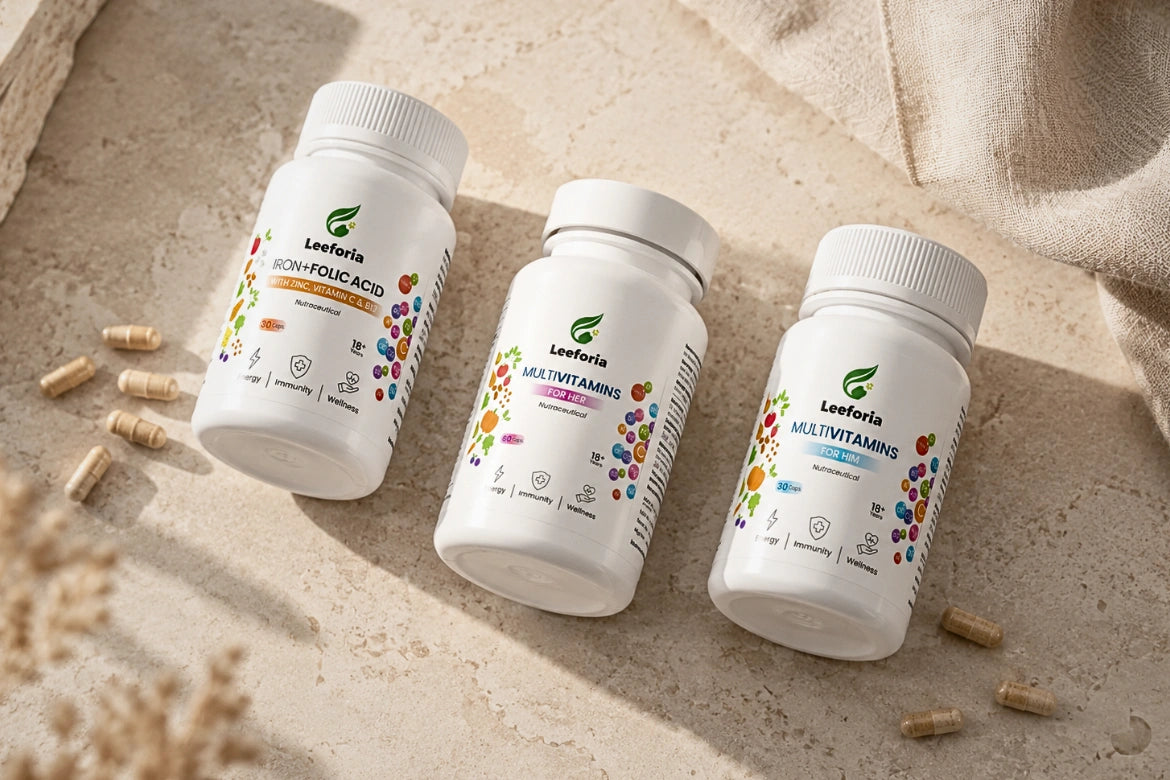
If your diet doesn't consistently include folate-rich foods, Leeforia's Iron and Folic Acid capsules are formulated to support both iron and folate levels together, since the two nutrients work closely alongside each other in the body.
Related reading: Signs of Vitamin Deficiency You Shouldn't Ignore · Iron Deficiency Symptoms in Women: What to Watch For
Frequently Asked Questions
Q: Can I get enough folic acid from food alone?
A: It's possible with a consistent, varied diet rich in leafy greens, legumes, and citrus fruits, but many women fall short due to irregular eating patterns. Supplements can help bridge the gap when needed.
Q: Is folic acid only important during pregnancy?
A: No. While it's especially emphasised during pregnancy planning, folate supports red blood cell production, cell growth, and energy levels for all women, at every life stage.
Q: What's the difference between folic acid and iron supplements?
A: They support different processes but work closely together — iron carries oxygen in the blood, while folate helps produce new red blood cells. This is why they're often combined in a single supplement.
Q: Can too much folic acid be harmful?
A: Very high intakes from supplements, well beyond typical recommended amounts, are generally advised against without medical guidance. Standard supplement doses are formulated to be safe for most healthy adults.
Q: How do I know if I'm folate deficient?
A: A blood test is the most reliable way to confirm it. Symptoms like fatigue and mouth soreness can suggest it, but overlap with other deficiencies, so testing gives a clearer answer.