Vegetarian Diet Nutrient Gaps: What's Missing?
A well-planned vegetarian diet can absolutely support good health — India's own long tradition of vegetarian eating proves that. But “vegetarian” doesn't automatically mean “nutritionally complete.” A handful of specific nutrients are genuinely harder to get consistently from plant-based sources, and knowing which ones matters more than generic diet advice.
Here's a clear-eyed look at where vegetarian diets tend to fall short, and practical ways to close those gaps.
Why Vegetarian Diets Can Fall Short in Specific Nutrients
This isn't about protein or calories, which vegetarian diets can cover well with enough variety. It's about a small set of micronutrients that are either exclusively or predominantly found in animal products, or that are present in plant foods in forms the body absorbs less efficiently.
The Main Nutrient Gaps to Watch
• Vitamin B12 — found almost exclusively in animal products; the single biggest gap for strict vegetarians and vegans
• Iron — plant-based (non-heme) iron is absorbed less efficiently than iron from meat
• Omega-3 fatty acids — mainly found in fish; plant sources like flaxseed provide a different, less directly usable form
• Vitamin D — limited in vegetarian food sources generally, regardless of diet type
• Zinc — present in legumes and grains, but absorption can be reduced by compounds naturally found in these same foods
• Calcium — generally fine for lacto-vegetarians via dairy, more of a gap for vegans
Vegetarian vs. Vegan: Different Gaps, Different Priorities
Lacto-ovo vegetarians (who eat dairy and eggs) have a real advantage over vegans for a couple of key nutrients — dairy provides calcium and some B12, and eggs add further B12 along with other micronutrients. Vegans, who exclude all animal products, generally need to be more deliberate about fortified foods and, in many cases, supplementation, since fewer natural dietary sources remain available to them.
Common Mistakes Vegetarians Make Nutritionally
• Relying on the same few staples — repeating dal-rice or paneer-roti daily limits nutrient variety compared to rotating different legumes, grains, and vegetables
• Overcooking vegetables — prolonged boiling can significantly reduce vitamin C and folate content
• Not combining foods strategically — eating iron-rich foods without a vitamin C source nearby means missing out on a meaningful absorption boost
• Assuming “vegetarian” automatically means “balanced” — a diet heavy in fried snacks and refined carbs is still vegetarian, but not necessarily nutrient-dense
Smart Food Combinations for Vegetarians
• Lentils or spinach + a squeeze of lemon — boosts iron absorption meaningfully
• Dairy + fortified cereal — helps cover both calcium and some B12 for lacto-vegetarians
• Nuts and seeds across the week — a simple way to add zinc and healthy fats without much effort
Fortified Foods Worth Adding
Fortified cereals, plant milks, and some packaged grains often have B12, vitamin D, or iron added during processing — checking labels for these can make a real difference for vegetarians, especially strict vegetarians and vegans who have fewer natural dietary sources to rely on.
A Sample Day of Balanced Vegetarian Eating
This isn't a strict plan to follow exactly, just an example of how the principles above come together in a normal day:
• Breakfast — poha or upma with peanuts, plus a glass of milk or fortified plant milk
• Lunch — dal, a leafy green sabzi, roti, and a side of citrus or tomato salad
• Snack — a handful of mixed nuts and seeds
• Dinner — rajma or chickpea curry with rice, and curd on the side
Nothing unusual here — the point isn't a special diet, it's making sure legumes, greens, dairy or fortified alternatives, and a vitamin C source show up regularly rather than occasionally.
When to Consider a Multivitamin
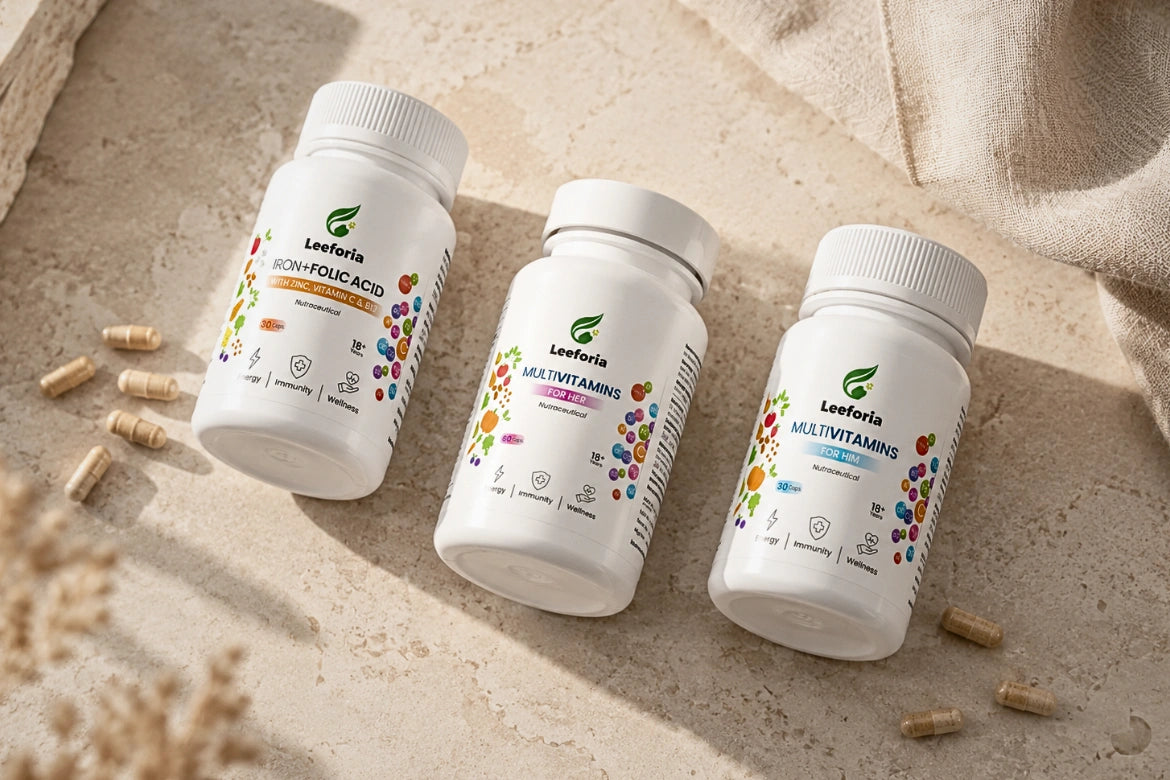
If your diet consistently misses these nutrient categories, a daily multivitamin formulated for vegetarians — like Leeforia's Multivitamin For Her or Multivitamin For Him — can help cover the gaps that are genuinely difficult to close through diet alone, without needing to overhaul your eating habits entirely.
Related reading: Vitamin B12 Deficiency: Signs Every Indian Should Know · Signs of Vitamin Deficiency You Shouldn't Ignore
Frequently Asked Questions
Q: Is a vegetarian diet automatically nutrient-deficient?
A: No — a well-planned vegetarian diet can be perfectly healthy. The key nutrients to pay specific attention to are B12, iron, vitamin D, and omega-3s, which are less naturally abundant in plant foods.
Q: Do vegans have more nutrient gaps than vegetarians?
A: Generally yes, since vegans also exclude dairy and eggs, which provide some B12 and calcium for lacto-ovo vegetarians. Vegans typically need to be more deliberate about fortified foods or supplementation.
Q: Can eating more vegetables alone fix these gaps?
A: Not entirely — some nutrients, like B12, are essentially absent from plant foods regardless of quantity, which is why fortified foods or supplements are commonly recommended for strict vegetarians.
Q: Is plant-based iron as good as iron from meat?
A: It's absorbed less efficiently, which is why pairing plant iron sources with vitamin C — to boost absorption — matters more for vegetarians than for those eating meat.
Q: How often should vegetarians get nutrient levels checked?
A: There's no universal rule, but periodic checks — especially for B12 and iron — are a reasonable idea, particularly if you've been vegetarian for years or notice symptoms like fatigue.