Iron Deficiency Symptoms in Women: What to Watch For
Iron deficiency is one of the most common nutritional gaps among women — and one of the most frequently missed. Because the early symptoms overlap with everyday tiredness and stress, many women live with low iron for months, sometimes years, before it's identified.
Understanding the specific signs your body gives you can help you catch it early, before it progresses into more significant anaemia that affects your daily energy, focus, and overall health.
Why Women Are More Prone to Iron Deficiency
Women lose iron every month through menstruation, which makes their iron requirements significantly higher than men's. Pregnancy increases this need even further, since the body must supply iron for both mother and baby. On top of that, many Indian diets — especially vegetarian ones — don't always provide enough easily absorbable iron to keep up with these higher demands.
The World Health Organization identifies iron deficiency as one of the leading causes of anaemia worldwide, with women of reproductive age among the groups most affected.
Common Symptoms to Watch For
• Persistent fatigue and weakness — one of the earliest and most common signs, since iron is essential for carrying oxygen through the blood
• Pale skin, lips, or inner eyelids — a visible sign of reduced red blood cell levels
• Shortness of breath — even during light activity that wouldn't normally cause it
• Dizziness or lightheadedness — especially when standing up quickly
• Cold hands and feet — reduced oxygen delivery can affect circulation
• Brittle nails or hair thinning — iron plays a role in healthy hair and nail growth
• Restless legs at night — a lesser-known but fairly common symptom of low iron
• Rapid or irregular heartbeat — your heart works harder to compensate for lower oxygen levels
• Headaches and poor concentration — often described as “brain fog” by women with low iron
Iron Deficiency vs. Anaemia: What's the Difference?
Iron deficiency and anaemia aren't quite the same thing — iron deficiency is a spectrum. In its early stages, your iron stores are low but your blood count may still appear normal. If it continues unaddressed, it can progress to iron-deficiency anaemia, where haemoglobin levels drop low enough to cause more pronounced symptoms. Catching it early, before it becomes anaemia, is always easier to correct.
Who's Most at Risk?
• Women with heavy or prolonged periods
• Pregnant women — iron needs roughly double during pregnancy
• Vegetarians and vegans — plant-based iron is less easily absorbed than iron from animal sources
• Frequent blood donors
• Women with digestive conditions that affect nutrient absorption
How Iron Deficiency Is Diagnosed
A simple blood test is the only reliable way to confirm iron deficiency. Doctors typically check haemoglobin levels and serum ferritin — ferritin specifically reflects your body's stored iron and can reveal a deficiency even before haemoglobin drops.
Iron-Rich Foods to Include in Your Diet
• Leafy greens — spinach, methi, and other greens common in Indian cooking
• Lentils and legumes — dal, chickpeas, and rajma are all solid plant-based iron sources
• Jaggery — a traditional addition to many Indian households, often used in place of refined sugar
• Dried fruits — dates and raisins in particular
• Pumpkin and sesame seeds
How to Improve Iron Absorption
Pairing iron-rich foods with vitamin C — like a squeeze of lemon on your dal, or citrus fruit alongside a meal — can significantly improve how much iron your body actually absorbs. On the other hand, tea and coffee consumed with meals can reduce absorption, so it's worth having them between meals rather than alongside iron-rich foods.
Calcium-rich foods and supplements can also interfere with iron absorption if taken at the same time, so it's worth spacing out dairy or calcium tablets from your main iron-rich meals of the day where possible.
Cooking Tips That Naturally Boost Iron Intake
• Cook in cast-iron cookware — traditional kadhais and tavas can naturally increase the iron content of food, especially acidic dishes like tomato-based curries
• Soak or sprout lentils and legumes — this reduces compounds that can block iron absorption, making the iron in dal and beans easier for your body to use
• Combine iron sources with citrus — a simple squeeze of lime over a lentil or leafy green dish goes a long way
Iron Needs During Pregnancy
Iron requirements roughly double during pregnancy, since the body needs to support increased blood volume as well as the baby's development. This makes pregnant women one of the groups most commonly advised to monitor iron levels closely and, in many cases, supplement under medical guidance. If you're pregnant or planning to be, this is a conversation worth having with your doctor early on.
When Supplements Can Help
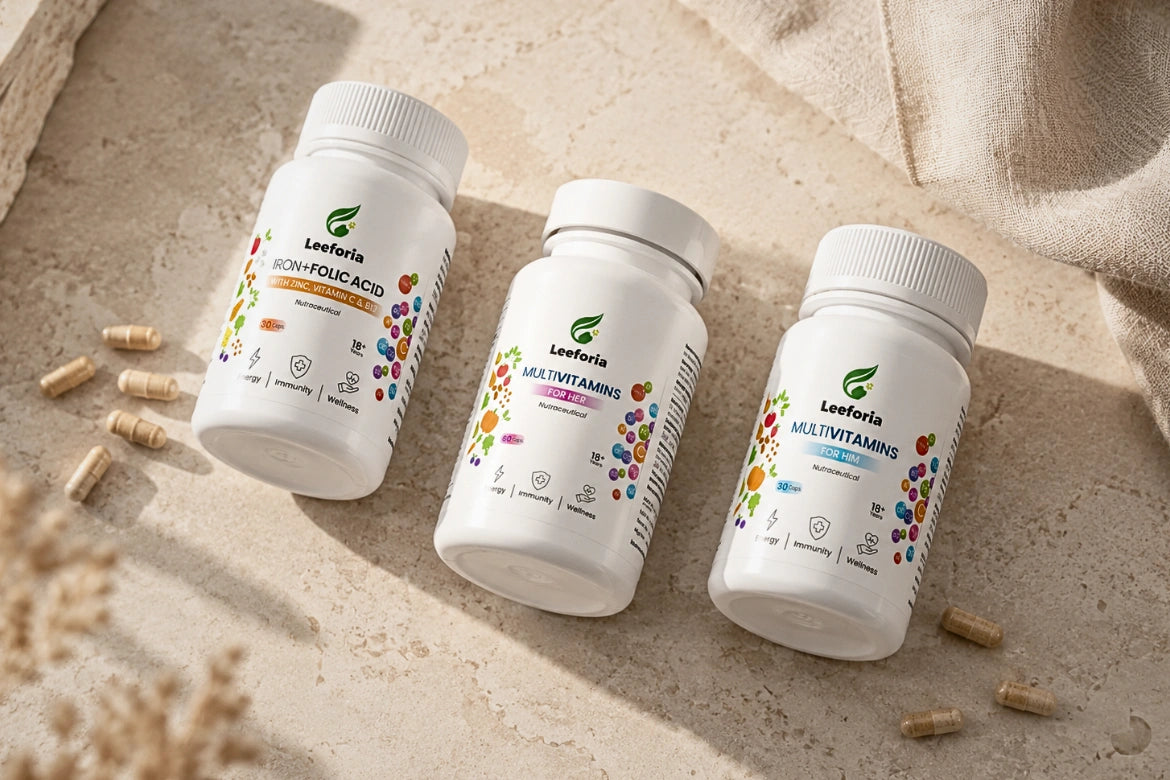
When diet alone isn't enough to keep up with your body's iron needs — particularly during heavy periods or pregnancy — a supplement like Leeforia's Iron and Folic Acid capsules can help bridge the gap. It's formulated to support healthy iron levels alongside folate, which works closely with iron in red blood cell production.
When to See a Doctor
Mild fatigue is common, but certain symptoms warrant prompt medical attention — chest pain, a rapid or irregular heartbeat, severe shortness of breath, or fainting. These can indicate more advanced anaemia or another underlying condition that needs proper evaluation.
Related reading: Signs of Vitamin Deficiency You Shouldn't Ignore · Best Time to Take Multivitamin Tablets: Morning or Night?
Frequently Asked Questions
Q: What is the fastest way to know if I have iron deficiency?
A: A blood test checking haemoglobin and ferritin levels is the only reliable way to confirm it. Symptoms alone can overlap with other conditions, so testing is the best first step.
Q: Can iron deficiency cause hair loss?
A: Yes. Iron plays a role in healthy hair growth, and low levels are a recognised, common contributor to hair thinning in women.
Q: Is it safe to take iron supplements without a doctor's advice?
A: Iron supplements are generally safe for most healthy adults at standard doses, but it's best to confirm an actual deficiency with a blood test first, since taking iron you don't need isn't beneficial.
Q: How much iron do women need daily?
A: Requirements vary by age and life stage, with higher needs during menstruation and pregnancy. Your doctor can advise the right amount based on your specific situation.
Q: Can I get enough iron from a vegetarian diet alone?
A: It's possible with careful planning — combining iron-rich foods with vitamin C sources, and being mindful of what reduces absorption — but many vegetarians still benefit from additional support through supplementation.