Multivitamins for Hair, Skin & Nails: Do They Work?
Search “multivitamin for hair growth” and you'll find endless promises of thicker hair, glowing skin, and stronger nails within weeks. The honest answer is more nuanced — nutrition genuinely does affect hair, skin, and nails, but it's one piece of a bigger picture, not a guaranteed transformation in a bottle.
Here's a realistic look at which nutrients actually matter, and what you can genuinely expect.
The Nutrients That Actually Matter
• Biotin (Vitamin B7) — commonly associated with hair and nail health, though deficiency is relatively uncommon in people eating a varied diet
• Iron — low iron is a well-documented, common contributor to hair thinning, particularly in women
• Zinc — plays a role in tissue growth and repair, including hair follicles
• Vitamin C — supports collagen production, relevant for skin structure and elasticity
• Vitamin E — an antioxidant sometimes linked to skin health support
Realistic Expectations
Hair, skin, and nail cells grow slowly, which means any nutritional improvement takes time to show visibly — typically several weeks to a few months of consistent intake, not days. If you're deficient in a relevant nutrient, correcting that deficiency can make a genuine difference. If your levels were already adequate, adding more of the same nutrient is unlikely to produce dramatic extra improvement.
When It's Not a Nutrition Issue
Hair, skin, and nail health are influenced by far more than diet — genetics, hormonal changes, styling and heat damage, harsh skincare products, ageing, and underlying health conditions all play a role. If you're eating reasonably well and still experiencing significant hair loss or skin issues, that's worth discussing with a doctor or dermatologist rather than assuming a supplement alone will resolve it.
Signs a Nutrient Gap Might Be the Cause
If hair thinning, brittle nails, or dull skin appear alongside other signs like fatigue or pale skin, a nutrient gap becomes a more likely contributing factor worth investigating — our article on vitamin deficiency signs covers this overlap in more detail.
Diet vs. Supplements for Hair, Skin & Nails
Whole foods rich in these nutrients — eggs, nuts, seeds, leafy greens, citrus fruits — provide a broader nutritional package than an isolated supplement alone. A multivitamin is most useful as a consistent baseline alongside a reasonable diet, not a replacement for one, particularly since hair and skin health also depend on protein intake and hydration, which supplements don't directly provide.
Building a Simple, Sustainable Routine
Rather than chasing a specific “hair vitamin” trend, the more reliable approach combines a few consistent habits: a varied diet with adequate protein, staying well hydrated, gentle hair and skincare practices that avoid unnecessary damage, and a daily multivitamin as nutritional backup. None of these alone is dramatic, but together, sustained over months rather than weeks, they tend to produce more noticeable results than any single intervention.
It's also worth tracking progress with photos taken every few weeks rather than relying on daily observation, since gradual change is genuinely hard to notice day to day even when it's happening.
Where Leeforia's Multivitamins Fit In
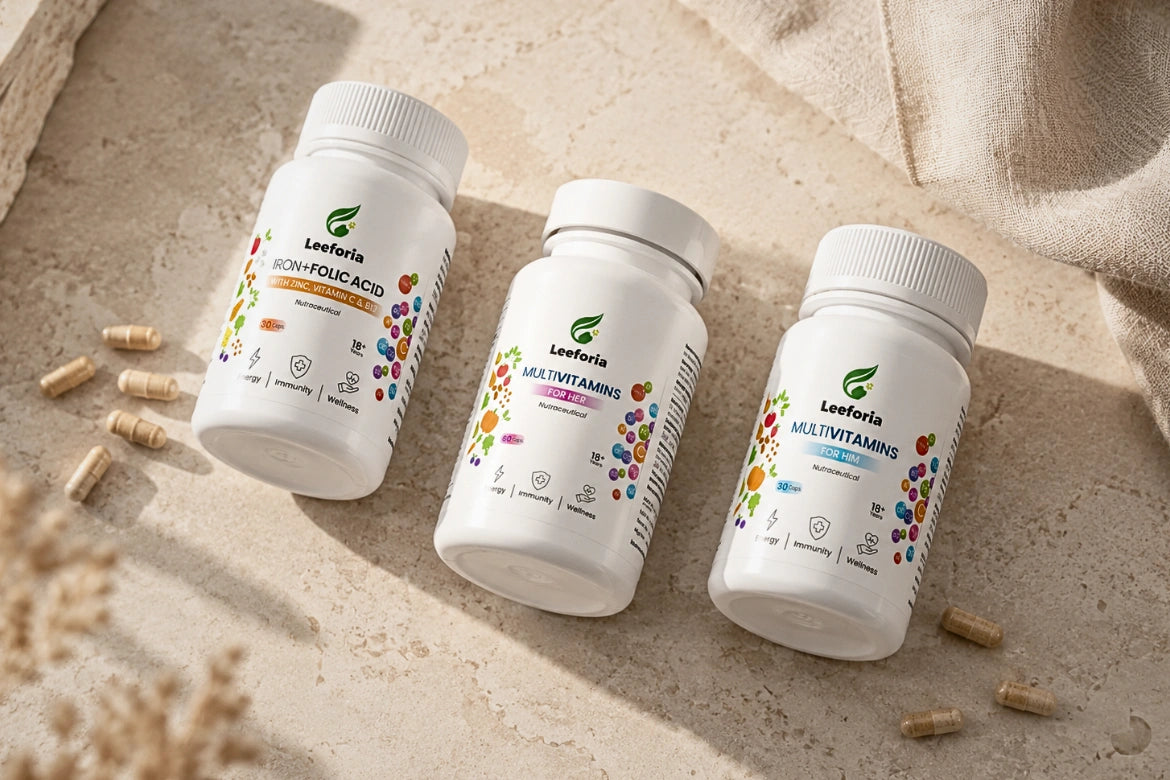
Leeforia's Multivitamin For Her and Multivitamin For Him include several of the nutrients discussed here as part of a broader daily formulation supporting overall wellness — a sensible baseline, alongside a varied diet, rather than a standalone hair or skin treatment.
Related reading: Signs of Vitamin Deficiency You Shouldn't Ignore · Iron Deficiency Symptoms in Women: What to Watch For
Frequently Asked Questions
Q: Can a multivitamin make my hair grow faster?
A: Not directly — hair growth rate is largely genetic. What a multivitamin can do is help address nutrient gaps that may be contributing to hair thinning or shedding, particularly iron deficiency.
Q: How long before I'd notice a difference in hair or skin?
A: Given natural cell turnover rates, most people would need several weeks to a few months of consistent nutrition to notice any visible change, if a nutrient gap was the underlying cause.
Q: Is biotin the most important nutrient for hair health?
A: It's often marketed that way, but biotin deficiency is relatively uncommon in people eating a varied diet. Iron and overall nutritional balance tend to matter more for most people experiencing hair thinning.
Q: Can supplements fix damaged hair from styling or heat?
A: No — nutrition supports the hair growing from the follicle, not hair that's already been physically damaged. Damaged strands need physical care and time to grow out.
Q: Should I see a dermatologist instead of trying supplements first?
A: If hair loss or skin changes are significant or sudden, yes — a dermatologist can identify the actual cause, which may or may not be nutritional.